These regions are not part
of Tibet proper, as in the administrative province of Tibet.
However, these regions are part of "greater Tibet" and are
populated by tibetan people
with as much tibetan culture as in Tibet proper. Feelings towards
the Chinese administration
are sometimes tense. The attitude of the Chinese police does not help
when they drive
in a very arrogant manner down the streets in military jeeps, wearing
helmets. Tibetans
speak with disdain about the Chinese police. While looking around
at a market with my
fellow traveller, a local tibetan came talk to us in perfect english.
He explained he had
fled to India, learned english and came back (illegally that is).
He told us that many who
try the arduous treck are caught by the Chinese police and are then
emprisonned,
sometimes tortured. As he spoke, a small crowd gathered around us,
and the locals
were probably amazed to see us talking. As we spoke, he started looking
around nervously.
Then suddenly, he switched conversation to "look, on the hills,
the yaks, it's so
beautiful". And a short time afterwards, he said goodbye and
left. Obviously, there
must have been someone in the crowd he did not feel comfortable with...

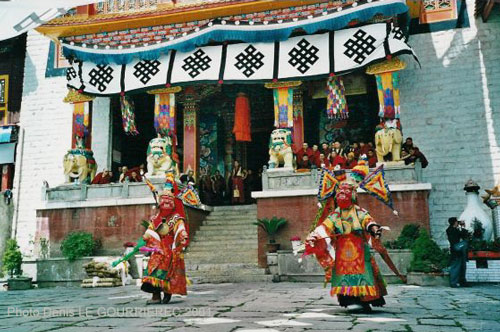
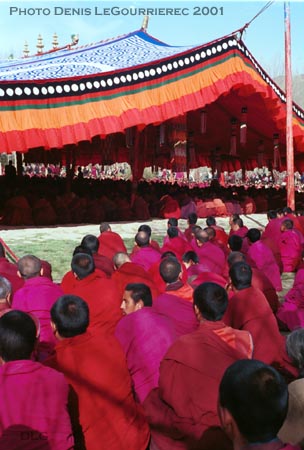
in Kangding (Sichuan) :
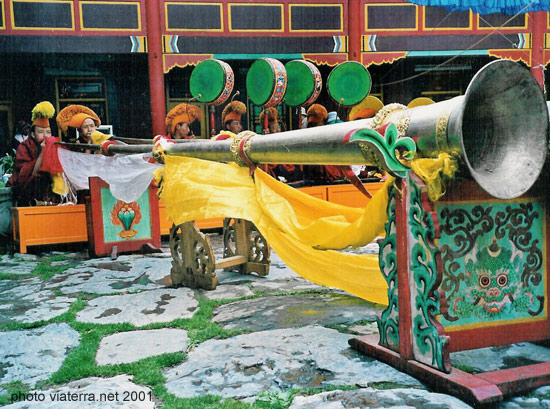
sacred dances of the monks on the occasion of Buddha's birthday
More
celebrations from
other countries
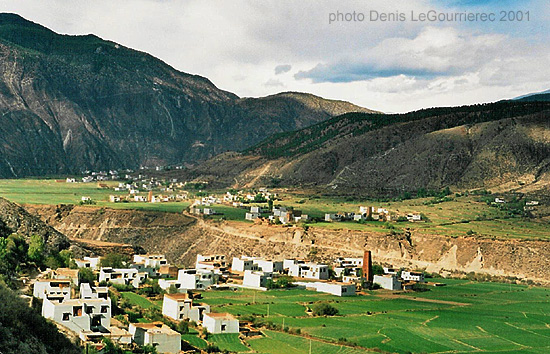
the village of Xiangsheng

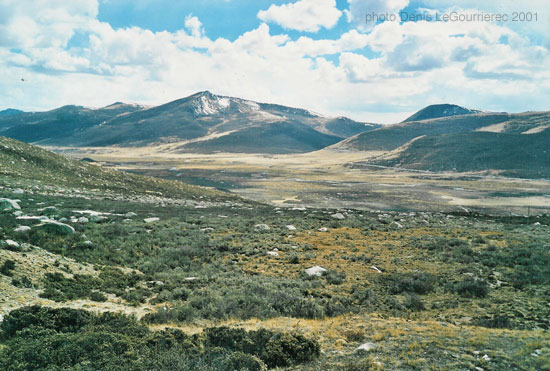
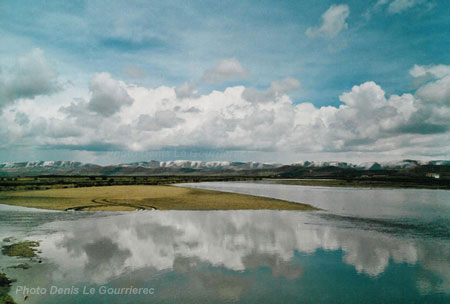
On the road between Xiangsheng and Litang (over 4000m)

in Amdo Province (see more reflections here)

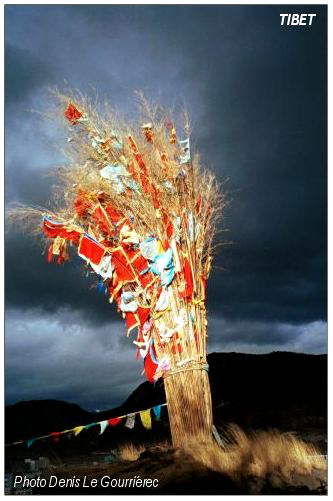
Prayer flags
(Zhongdian, Yunnan Province)

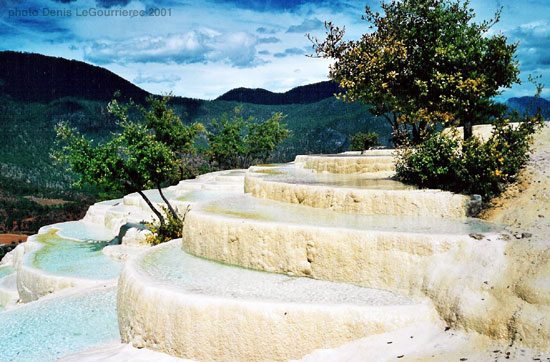
The natural limestone pools of Bai Shui Tai (White Water Village)
(you can also find such calcerous cascades at Pamukkale, Turkey)

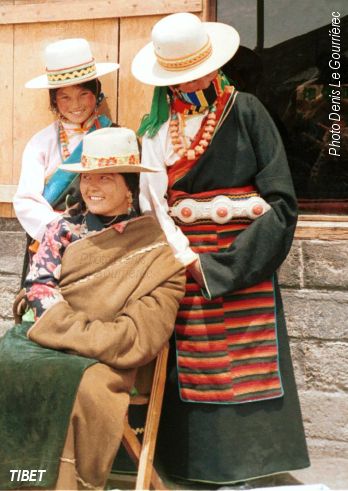
T ibetan ladies (Western Sichuan)

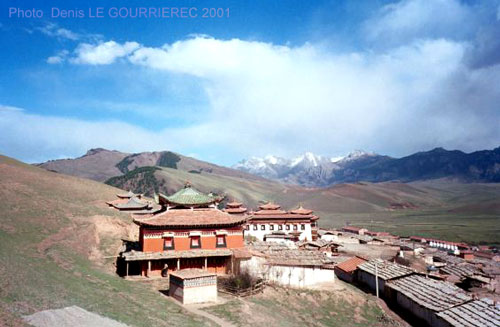
Monastery in the grasslands (at the limit
between Gansu and Sichuan Provinces, near Langmusi)
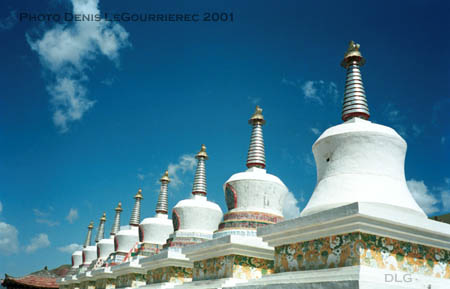
Stupas (near the monastery on the photo just above)

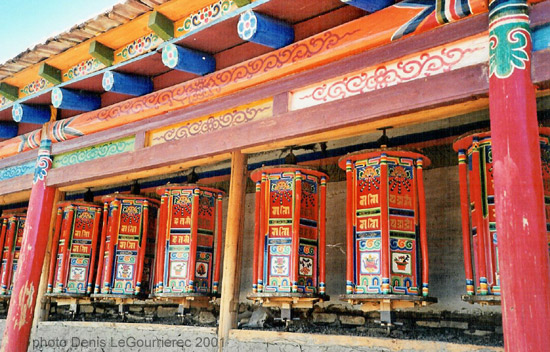
Prayer wheels around the monastery at Langmusi

Xiahe : meeting of tibetan monks